Lesson 4 Recap: IPOs and the Primary Market.
In Lesson 4, we explored how companies raise capital through Initial Public Offerings (IPOs) in the primary market. You learned how investors can participate in IPOs, the process of listing shares, and the difference between primary and secondary markets. This foundation is crucial before diving into market participants, because knowing who invests in the market helps you understand trends and price movements.
Market Participants
Learning Outcome:
Understand the roles of retail investors, FIIs, and DIIs in the stock market and their influence on trends.
Key Takeaway:
Every participant—from a small retail investor to a foreign institutional investor—plays a role in shaping market behavior.
Fii & Dii Data Comparision
Fiis Return in Force
1. Introduction to Market Participants
The stock market is not just numbers and charts—it’s a dynamic ecosystem. Imagine a bustling bazaar: small shopkeepers (retail investors), wholesalers from abroad (FIIs), and big domestic companies (DIIs) all trade simultaneously. Their actions collectively influence price movements, market liquidity, and long-term trends.
Did You Know? In 2023, FIIs withdrew over ₹30,000 crores in two months, causing temporary market dips, while DIIs provided stability by purchasing undervalued stocks.
2. Retail Investors: The Heart of the Market
2.1 Who Are Retail Investors?
Retail investors are individuals investing their personal money in stocks. They may be beginners or experienced traders. While their investments may be smaller, collective behavior can significantly impact market sentiment, especially in small-cap and mid-cap stocks.
2.2 Characteristics of Retail Investors
- Invest smaller amounts compared to institutions.
- Often influenced by news, trends, and emotions.
- Can be long-term investors or short-term traders.
2.3 How Retail Investors Affect Market Trends
Retail investors often create short-term volatility:
- Positive news → buying frenzy → price spike
- Negative news → panic selling → price drop
Example: A popular tech stock surged 25% in one week due to retail enthusiasm, despite DIIs and FIIs remaining neutral.
2.4 Tips for Retail Investors
- Avoid herd mentality.
- Focus on long-term fundamentals.
- Track FII and DII actions for better insights.
Pro Tip: Emotional decisions often lead to losses. Use research and patience instead.
Course- Learn about the Market:
- Lesson 1: What is a Stock Market? Beginner’s Guide to Understanding Shares & Trading
- Lesson 2: How Does the Stock Market Work? The Secret Engine of the Stock Market – Explained Simply
- Lesson 3: Types of Financial Markets Explained with Real-Life Examples (Stock Market Course)
- Lesson 4: Stock Market Course – Lesson 4: IPOs and the Primary Market
3. Foreign Institutional Investors (FIIs): The Big Market Movers
3.1 Who Are FIIs?
FIIs are foreign entities investing in Indian markets, including hedge funds, mutual funds, and pension funds. They influence both equities and bonds.
3.2 Characteristics of FIIs
- Large-scale investors with substantial buying power.
- Data-driven investment strategies.
- Prefer blue-chip and high-growth stocks.
3.3 How FIIs Affect Market Trends
FIIs can trigger major market swings:
- Large inflows → market rally
- Sudden withdrawals → market correction
Example: In Q1 2022, FIIs invested ₹50,000 crores in Indian equities, boosting Sensex past 60,000 points.
3.4 Sector Case Study: IT Sector
- Event: US Fed rate hike fears
- FII Action: Sold IT stocks heavily
- Impact: Short-term decline of 15–20%
- Recovery: DIIs and retail investors gradually bought, stabilizing prices
3.5 Tips for Investors Watching FIIs
- Monitor weekly FII inflows and outflows.
- Treat FII actions as signals, not absolute strategies.
- Understand their reaction is global news-driven, not solely India-focused.
4. Domestic Institutional Investors (DIIs): The Stabilizers
4.1 Who Are DIIs?
DIIs are Indian institutions investing domestically, such as:
- Mutual funds
- Insurance companies
- Banks and pension funds
4.2 Characteristics of DIIs
- Long-term, steady investors.
- Invest in both equity and debt instruments.
- Act as market stabilizers during FII sell-offs.
4.3 How DIIs Influence Trends
- Provide market stability during volatile periods.
- Support sectors with consistent investment.
- Counterbalance FII actions to reduce short-term shocks.
Example: During the 2020 pandemic crash, DIIs steadily bought undervalued stocks, aiding market recovery faster than global indices.
4.4 Tips for Investors Watching DIIs
- Track monthly DII activity reports.
- Use DII trends for long-term investment planning.
- DIIs are slower to act but more predictable than FIIs.
5. How All Participants Interact
- Retail investors: React emotionally; short-term volatility drivers
- FIIs: Influence major market swings; global trend followers
- DIIs: Provide stability; counterbalance FII movements
Story Analogy: The market is a boat: FIIs are waves, DIIs are the keel stabilizing it, and retail investors are passengers whose movements tip the boat. Understanding this helps navigate market storms safely.
6. Understanding Market Trends Through Participants
| Participant | Typical Impact | Timeframe | Example |
|---|---|---|---|
| Retail | Volatile movements | Short-term | Tech stock hype |
| FII | Big market swings | Medium-term | Sector inflows/outflows |
| DII | Market stability | Long-term | Mutual fund buying |
7. Practical Tips for Investors
- Don’t panic during FII sell-offs.
- Track FII and DII flows before making decisions.
- Use retail sentiment as a contrarian indicator.
- Maintain a diversified portfolio to minimize volatility impact.
To Check Daily FII & DII Data : Click Here
-
Top 10 Stocks to Watch: Q1 Earnings Momentum & Sectoral Breakouts (August 3, 2026): Weekly Market Intelligence: 10 Stocks to Watch

Dalal Street is stepping into August 2026 with a strong stock-specific bias driven by the Q1 FY27 earnings season. While elevated crude oil prices and global rate decisions keep broad-index rallies in check, institutional capital is actively rotating into power grid equipment, non-ferrous metals, automotive outperformance, and high-margin private banks. Technically, the Nifty 50 faces…
-
Trading Alert: Indian Stock Market Holidays on March 31 and Good Friday 2026
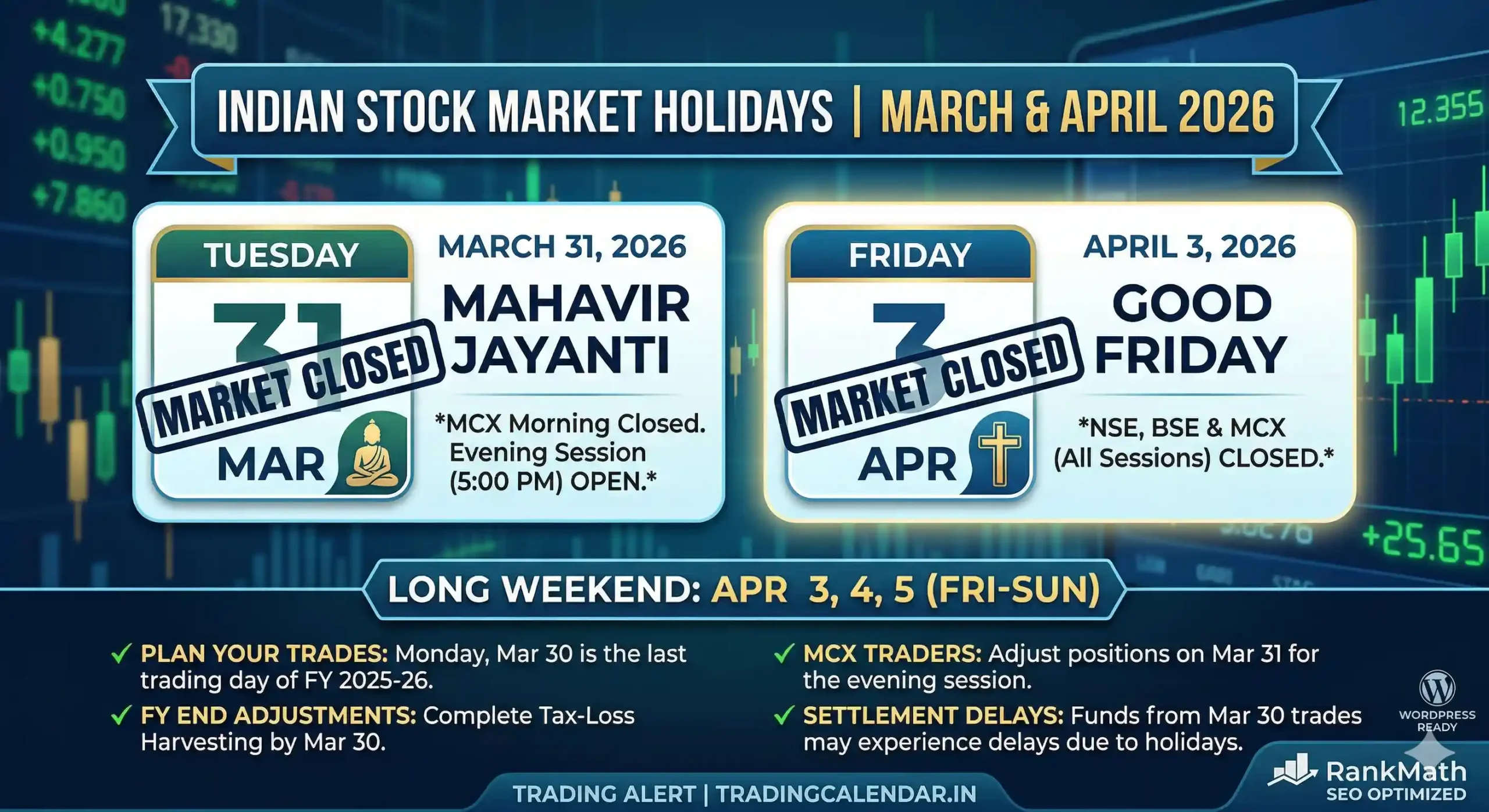
Stock Market Holidays 2026| NSE Holiday List| BSE Holidays| Mahavir Jayanti 2026| Good Friday 2026| Trading Calendar India| Share Market News| NSE Closed Dates| Indian Stock Market. Critical Dates & Holiday Schedule Event Date Day Market Status Mahavir Jayanti March 31, 2026 Tuesday Closed Annual Bank Closing April 01, 2026 Wednesday Open (Settlement Holiday) Good…
-
Market Pulse: Top Intraday Stock Picks Amid Global Volatility| Hold any!
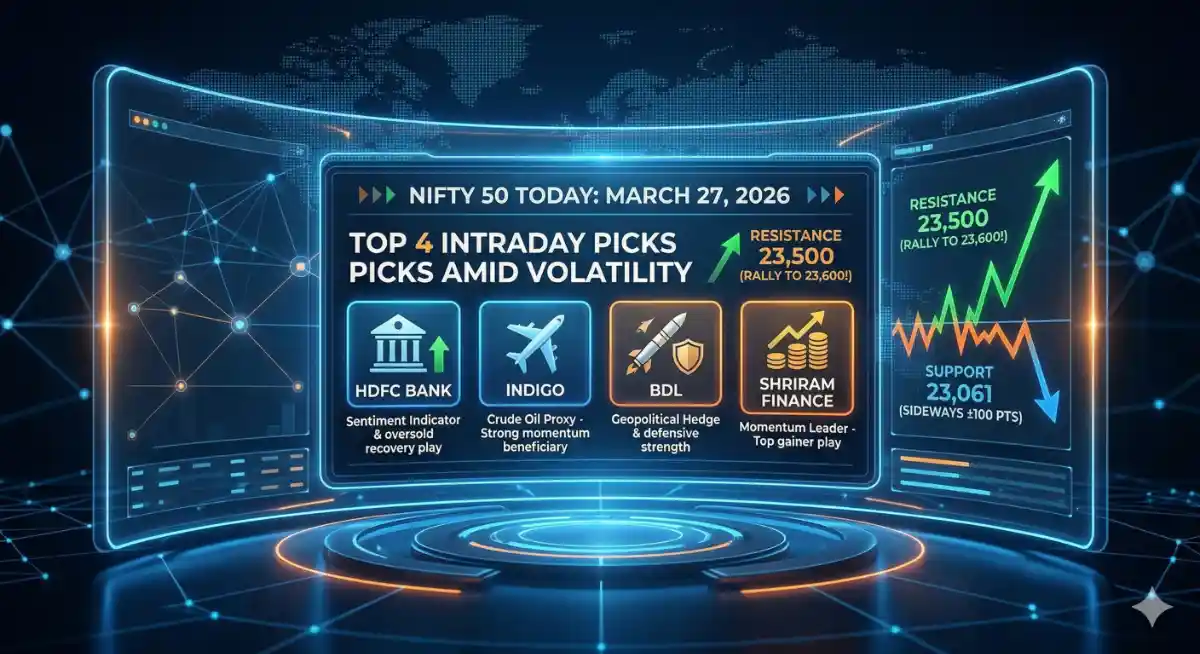
Intraday Stock Picks March 27| Nifty 50 Trading Strategy| HDFC Bank Share Price Target| Top Stocks to Buy Today The trading session for March 27, 2026, presents a unique challenge for day traders. While the Nifty 50 showed a glimpse of recovery in the previous session, the “Global Tension” narrative continues to weigh on investor…
8. Quiz and Interactive Section
- Name three types of market participants.
- Give one example of FII market influence.
- How do DIIs stabilize trends?
- Why should retail investors avoid herd behavior?
9. Summary of Lesson 5
Understanding market participants is essential for traders and investors:
- Retail investors: Short-term sentiment drivers
- FIIs: Major market movers influenced by global factors
- DIIs: Steady stabilizers ensuring long-term growth
Takeaway: Observe participant behavior, analyze trends, and combine insights with fundamentals for smarter investing.
10. Lesson 6 Preview: Types of Orders and How Trading Works
In the next lesson, you will learn:
- Different types of stock market orders (market, limit, stop-loss)
- How trades are executed on NSE and BSE
- Understanding order books, settlement, and trading strategies
This lesson builds on your knowledge of participants, showing how their actions translate into executed trades and market movement.
Course Introduction
🌟 Coming Up in Lesson 6
👉 “Lesson 6 Preview: Types of Orders and How Trading Works
In the next lesson, you will learn:
- Different types of stock market orders (market, limit, stop-loss)
- How trades are executed on NSE and BSE
- Understanding order books, settlement, and trading strategies
Mark your calendar – Lesson 4 is on the way with exciting insights on IPOs.🚀
Open Demat Account
by Mirae Asset (m,Stock)

-
Top 10 Stocks to Watch: Q1 Earnings Momentum & Sectoral Breakouts (August 3, 2026): Weekly Market Intelligence: 10 Stocks to Watch
Dalal Street is stepping into August 2026 with a strong stock-specific bias driven by the Q1 FY27 earnings season. While elevated crude oil prices and global rate decisions keep broad-index rallies in check, institutional capital is actively rotating into power grid equipment, non-ferrous metals, automotive outperformance, and high-margin private banks. Technically, the Nifty 50 faces…
-
Trading Alert: Indian Stock Market Holidays on March 31 and Good Friday 2026
Stock Market Holidays 2026| NSE Holiday List| BSE Holidays| Mahavir Jayanti 2026| Good Friday 2026| Trading Calendar India| Share Market News| NSE Closed Dates| Indian Stock Market. Critical Dates & Holiday Schedule Event Date Day Market Status Mahavir Jayanti March 31, 2026 Tuesday Closed Annual Bank Closing April 01, 2026 Wednesday Open (Settlement Holiday) Good…
-
Nifty 50 and Sensex Post-Bloodbath Analysis: Recovery or Trap?
Nifty 50 Prediction Tomorrow| Sensex Analysis March 2026| Indian Stock Market Recovery| Stock Market Bloodbath Reasons The Indian stock market recently faced a “Black Monday” on March 23, 2026, where the Sensex plunged nearly 2,000 points and the Nifty 50 tumbled over 600 points. However, the session on Tuesday, March 24, has brought a sigh…