Intraday vs Delivery| Difference Trading| Stock Market Trading Types
Learning Outcome: Difference between short-term and long-term trading| Key Takeaway: Intra is risky, delivery is wealth-building
🔰 Understanding Trade in Stock Market
When a person enters the stock market, the first thing they do is trade — buy and sell shares.
But most beginners do not clearly understand what kind of trade they are doing.
Some people want quick money and choose fast trades.
Some people want stability and choose long-term holding.
Both are called trading, but the approach, risk, and mindset are completely different.
That is why before learning strategies or indicators, it is very important to understand types of trades in the stock market.
In the stock market, trades are mainly divided into two types based on holding period.
These two types decide how long you stay in the market, how much risk you take, and how you make money.
🟦 Types of Trades in Stock Market
There are two main types of trades:
1️⃣ Intra Trading
2️⃣ Deliv Trading
Now let us understand each one clearly, one by one.
🔴 Intraday Trading
📌 What is Intraday Trading?
Intra. trading means buying and selling a stock on the same trading day.
In this type of trade, no share is carried to the next day.
The trader aims to make profit from small price movements within the day.
If the trader does not exit the trade before market close, the broker automatically closes the position.
📌 Example of Intraday Trading
A trader buys a stock at ₹150 in the morning. (eg: 10,000 shares @ 150 each=15,00,000)
The same stock is sold at ₹155 before market closes. (eg: 10,000 shares @ 155 each = 15,50,000
Here Profit Rs.50,000( 15,00,000- 15,50,000) Gain Rs.50,000(155-150=5 each so 10,000×5)
The entire trade happens in one day, and the profit is based on short-term price movement.
✅ Pros of Intraday Trading
- Possibility of quick profit
- Lower capital required due to margin
- No overnight market risk
- Suitable for experienced traders
❌ Cons of Intraday Trading
- Very high risk
- Requires constant market watching
- Emotional pressure is high
- Strict stop-loss is mandatory
- Not suitable for beginners
Intraday trading looks attractive, but without discipline and experience, it can quickly lead to losses.
🟢 Delivery Trading
📌 What is Delivery Trading?
Delivery trading means buying shares and holding them for more than one day.
The shares are credited to the trader’s Demat account, making them the actual owner.
The holding period can be:
- A few days
- A few months
- Or even several years
Delivery trading focuses on company growth and long-term value, not daily price movement.
📌 Example of Delivery Trading
An investor buys a stock at ₹300 and holds it for one year. (eg: 10,000 shares @ 300 each=30,00,000)
After one year, the stock price becomes ₹550. (eg: 10,000 shares @ 550 each=55,00,000)
Here Profit Rs.50,000( 55,00,000- 30,00,000) Gain Rs.25,00,000(550-300=250 each so 10,000×250)
The profit comes from time, business growth, and market expansion.
✅ Pros of Delivy Trading
- Lower risk compared to intraday
- Best suited for beginners
- No need to watch market daily
- Helps in long-term wealth creation
- Benefits from dividends and compounding
❌ Cons of Delivy Trading
- Requires more capital
- Returns are slow in the beginning
- Market ups and downs test patience
Delivery trading rewards discipline and patience, not speed.
⚖️ Difference Between Trading
Intra. trading focuses on today’s price movement, while delivery trading focuses on future growth.
Intra. traders try to earn daily income with high risk.
Deliv. traders aim to build wealth over time with controlled risk.
Intra. requires full attention and emotional control.
Deliv. allows a calm approach and long-term thinking.
🧠 Which Trading Type is Better for Beginners?
For beginners, delivery trading is always the safer and wiser choice.
It helps beginners:
- Understand how the market works
- Learn patience and discipline
- Avoid emotional and rushed decisions
- Build confidence step by step
Intraday trading should be attempted only after gaining:
- Market knowledge
- Risk management skills
- Emotional control
⭐ Final Takeaway of Lesson 13
Intraday trading is fast and risky.
Delivery trading is slow and wealth-building.
A beginner should first learn to protect capital, not chase quick profit.
In the stock market, survival comes before success.
Difference between Intra. and Deliv.| Stock Market Trading Types
📌 Final Affiliate CTA
Start trading with professional order types, GTT automation and Mini brokerage
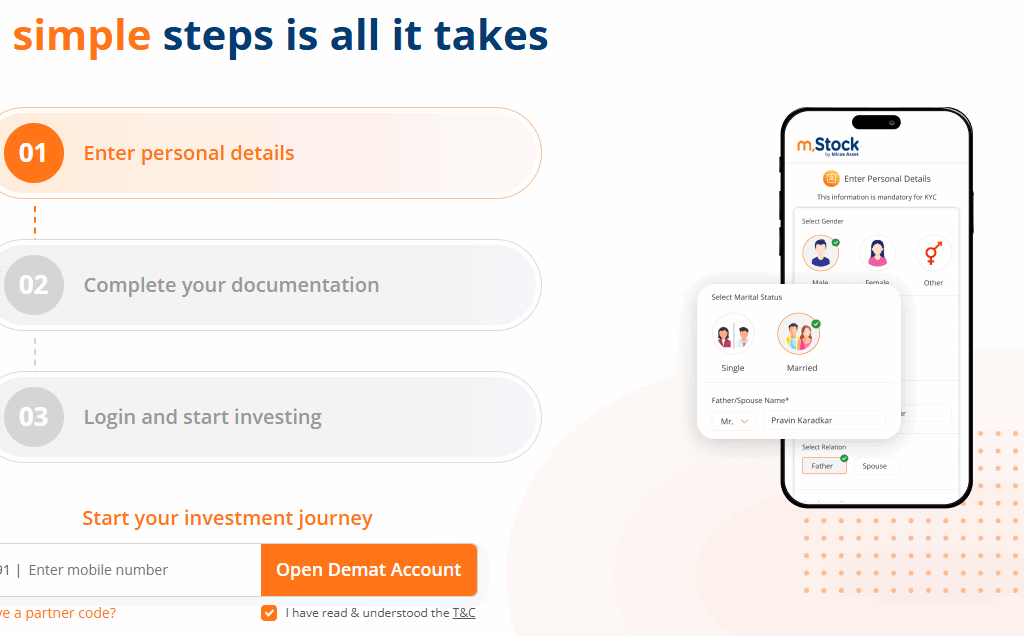
👉Open Your mStock Demat Account: Click Here
Order Types in stock market| Market Order| Limit Order| Stop-Loss Order| GTT Order
Course Introduction:
🌟 Coming Up in Lesson 14: Short Selling & Margin Trading
Making money in falling markets.
Key Takeaway: Powerful but risky tools.
You Can visit:
Open Demat Account
by Mirae Asset (m,Stock)

-
Top 10 Stocks to Watch: Q1 Earnings Momentum & Sectoral Breakouts (August 3, 2026): Weekly Market Intelligence: 10 Stocks to Watch
Dalal Street is stepping into August 2026 with a strong stock-specific bias driven by the Q1 FY27 earnings season. While elevated crude oil prices and global rate decisions keep broad-index rallies in check, institutional capital is actively rotating into power grid equipment, non-ferrous metals, automotive outperformance, and high-margin private banks. Technically, the Nifty 50 faces…
-
Trading Alert: Indian Stock Market Holidays on March 31 and Good Friday 2026
Stock Market Holidays 2026| NSE Holiday List| BSE Holidays| Mahavir Jayanti 2026| Good Friday 2026| Trading Calendar India| Share Market News| NSE Closed Dates| Indian Stock Market. Critical Dates & Holiday Schedule Event Date Day Market Status Mahavir Jayanti March 31, 2026 Tuesday Closed Annual Bank Closing April 01, 2026 Wednesday Open (Settlement Holiday) Good…
-
Nifty 50 and Sensex Post-Bloodbath Analysis: Recovery or Trap?
Nifty 50 Prediction Tomorrow| Sensex Analysis March 2026| Indian Stock Market Recovery| Stock Market Bloodbath Reasons The Indian stock market recently faced a “Black Monday” on March 23, 2026, where the Sensex plunged nearly 2,000 points and the Nifty 50 tumbled over 600 points. However, the session on Tuesday, March 24, has brought a sigh…