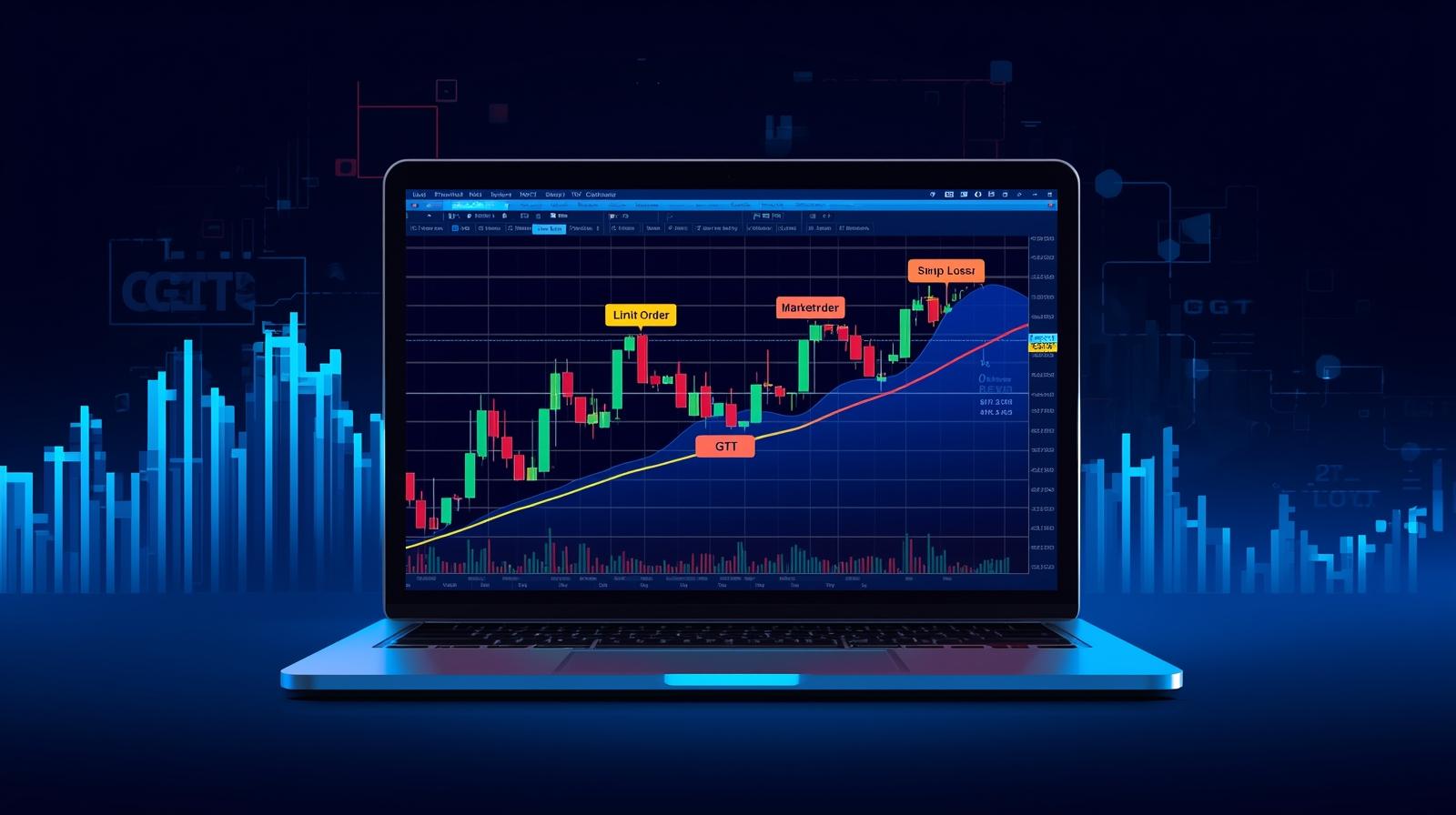
Order Types in stock market| Market Order| Limit Order| Stop-Loss Order| GTT Order
🔥 Introduction
If the stock market was a battlefield, stocks are the weapons,
but order types are the strategy.
Most beginners enter the market with excitement —
they want to buy, they want to earn, they want to win.
But they don’t realize something very important:
👉 It’s not the market that decides the result… it’s how you place your orders.
The exact same stock can give:
- Profit to one trader
- Loss to another trader
Only because of different order types.
So today, you will learn the real foundation of safe and disciplined trading —
Market Order, Limit Order, GTT, and Stop-Loss.
📌 Affiliate Link — Start trading smart with Mini brokerage
👉 Click Here
Let’s begin your professional transformation.
🟦 1. What is an “Order” in Stock Market?
When you buy or sell shares, you don’t directly interact with the stock exchange.
You give instructions to your broker.
Those instructions are called Orders.
An order tells:
- What you want to buy or sell
- In what quantity
- At what price
- Under which conditions
So an order is not just “Buy / Sell” —
an order contains your trading plan.
A smart trader asks:
“How do I want my trade to be executed?”
A careless trader just presses BUY or SELL without thinking.
Order types exist to give traders:
- Control
- Protection
- Planning
- Discipline
Now let’s understand each type one by one.
🟩 2. Market Order
✳ Meaning
A Market Order means:
“Buy or sell immediately at the current market price.”
No waiting, no planning — instant execution.
🌍 2.1 Market Order — BUY
When you place a Market Buy Order, the broker buys the shares at the best available price in the market at that moment.
Example:
Current price shown = ₹100
You place Market Buy
Your order may execute at:
- ₹100.05
- ₹100.20
- ₹99.90
- depending on moment-to-moment fluctuation. This price difference is called Slippage.
🔻 2.2 Market Order — SELL
When selling at market price, shares are sold instantly to the best available buyer.
Example:
Displayed price = ₹250
Market Sell executes at:
- ₹249.70
- ₹250.10
- ₹249.20
So selling instantly may give slightly better or worse price.
🟩 Example (Realistic)
Rohit sees a stock suddenly rising. Without thinking, he places Market Buy at ₹850.
But the price was jumping fast.
He gets execution at ₹860 — ₹10 more than expected.
Rohit felt “I entered late”.
But the real reason was — wrong order type.
📌 When to use Market Order
- For long-term investment
- For exiting urgently
- For highly liquid large-cap stocks
❌ When NOT to use Market Order
- In volatile stocks
- In opening market (9:15 to 9:20)
- In low-volume / penny stocks
🟧 3. Limit Order
✳ Meaning
A Limit Order means:
“Buy or sell only at the price I decide.”
You set your price.
If the market reaches that price, the trade is executed.
🔼 3.1 Limit Order — BUY
Example:
Current price is ₹120
You want to buy only at ₹115
So you place:
Buy Limit Order = ₹115
If stock comes down to ₹115 → Order executes
If stock stays above ₹115 → Order remains pending
🔽 3.2 Limit Order — SELL
Example:
You bought a share at ₹500
You want to book profit at ₹540
So you place:
Sell Limit Order = ₹540
If price rises to ₹540 → order executes
If price stays below → no execution
🟧 Example (Scenario)
Meera knows a good stock trades between ₹300–₹310.
She doesn’t want to chase price, so she places:
Buy Limit Order: ₹303
Price falls → her order executes → she gets perfect entry
Later stock jumps to ₹335 → Meera books profit calmly.
Her entry was smart because she controlled the price using Limit Order.
📌 When to use Limit Order
- For planned buying
- For target selling
- For disciplined trading without emotions
Limit Order teaches one important trading skill — patience over excitement.
🟨 4. GTT Order — Good Till Triggered
✳ Meaning
A GTT order allows you to set Entry, Target, and Stop-Loss all together.
And it remains active for up to 1 year.
You don’t have to watch the market.
🟨 Example (Perfect Use Case)
Stock price today = ₹100
You want to:
- Buy only at ₹95
- Book profit at ₹118
- Protect yourself at ₹90
So you place GTT:
Entry Trigger = 95
Target = 118
Stop-Loss = 90
You close the laptop → GTT waits for opportunity → executes without emotions.
💭 Why GTT is revolutionary
- No screen time required
- No emotional trading
- Helps working professionals & students
- Fully systematic trading
🟨 When GTT becomes a superpower
- When you fear overtrading
- When you do revenge trading after loss
- When you suddenly change target due to greed
GTT makes you behave like a disciplined investor, even when emotions are strong.
📌 Affiliate CTA — Smart investing with GTT automation & zero brokerage
👉 Open Your mStock Demat Account: Click Here
🟥 5. Stop-Loss — The Lifeguard of Trading
✳ Meaning
A Stop-Loss is a condition that automatically exits the trade to prevent big loss.
Example:
Buy at ₹250
Stop-Loss set at ₹242
If stock falls to ₹242 → system sells automatically → heavy loss prevented.
💡 Why Stop-Loss is Important
Because humans are emotional.
When trade goes in loss:
- Beginners think “it will come back”
- Professionals know “loss must be limited”
Stop-loss protects your capital, confidence, and mindset.
🟪 Pros & Cons of Stop-Loss
| Pros | Cons |
|---|---|
| Protects capital automatically | Loss gets booked immediately |
| Removes emotional decision | May trigger during volatility |
| Allows relaxation & confidence | Needs thoughtful placement |
| Keeps losses small | Tight SL = early exit |
A stop-loss is like a seat belt.
You don’t drive expecting an accident —
but if something unexpected happens, you’ll survive.
🟦 How Stop-Loss Benefits Traders
| Area | Benefit |
|---|---|
| Profit | Stops profit from turning into loss |
| Psychology | Reduces stress and fear |
| Capital | Saves money for new opportunities |
| Decision-making | Eliminates emotional reactions |
Professional traders never worry about losing trades because:
- Their Stop-Loss decides the loss
- Their strategy decides the profit
The goal is not to win every trade —
The goal is to protect capital until the winning trade arrives.
🔥 Putting It Together — How Pros Use All Four
A professional trader does NOT choose random order types.
Their flow looks like this:
1️⃣ Limit Order for perfect entry
2️⃣ Stop-Loss set immediately
3️⃣ Target defined using Limit Order or GTT
4️⃣ If busy or long-term → use GTT (Entry + Target + SL)
5️⃣ Market Order only for urgent exit
So order type is not a button —
Order type is a strategy for survival and growth.
🧠 Final Practical Example (Full Journey)
Rakesh used to trade without stop-loss and lose money.
After training, he started using order types smartly.
Stock current price = ₹725
He wants to buy only at ₹712
So he placed:
Buy Limit Order = ₹712
Price came → entry executed
Immediately he set:
Stop-Loss = ₹699
Target = ₹752
After 6 days → stock hit ₹752 → target achieved 🎉
He did nothing… because his order types worked for him.
He didn’t chase the stock.
The stock came to him.
📌 Lesson: 12: Success in stock market is not luck — it is discipline.
🟢 Summary of Lesson 12 (Big Takeaway)
| Order Type | Main Purpose |
|---|---|
| Market Order | Immediate entry/exit |
| Limit Order | Enter/exit at your chosen price |
| GTT Order | Fully automated entry + target + SL |
| Stop-Loss | Prevent big losses automatically |
👉 The right stock may still lose without the right order type.
👉 But the right order type protects even an average trade.
📌 Final Affiliate CTA
Start trading with professional order types, GTT automation and Mini brokerage
👉Open Your mStock Demat Account: Click Here
Order Types in stock market| Market Order| Limit Order| Stop-Loss Order| GTT Order
Course Introduction:
🌟 Coming Up in Lesson 13: Intraday vs Delivery
Learning Outcome: Difference between short-term (intraday) and long-term (delivery) trading.
Key Takeaway: Intraday is high-risk for quick profits, delivery is safest for long-term wealth building.
You Can visit:
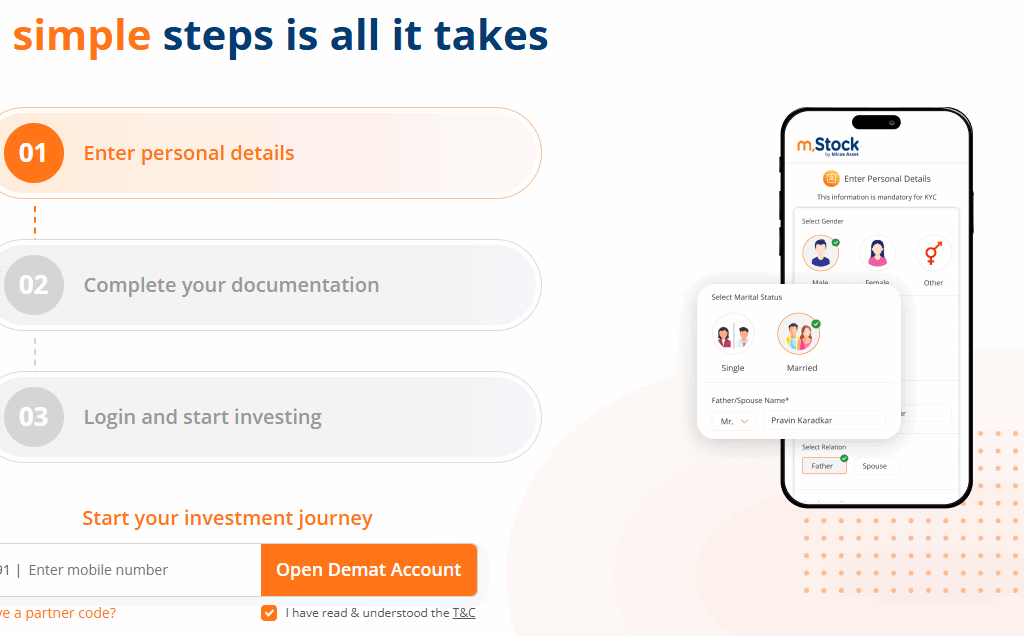
Open Demat Account
by Mirae Asset (m,Stock)

-
The Great Lockdown: Iran’s Strategic Halt of Food Exports in 2026
Iran Food Export Ban| Iran Agricultural Halt 2026| Middle East Food Security Crisis| Iran Domestic Supply Protection| Iran Food Export…
-
Iran-Israel War: Unpacking “Operation Lion’s Roar” and its Ripple Effect on Global Markets – A Deep Dive for Indian Investors
Iran-Israel War Market Impact| Operation Lion’s Roar update| Effect of Iran war on Nifty 50| Crude oil price surge 2026|…
-
The Tariff Tussle: Decoding the Legal Challenge to Executive Trade Power
Supreme Court| Tariffs| Trade War 2026| Donald Trump| IEEPA| Section 301| US Economy| Import Duties| Constitutional Law| Reciprocal Trade Act…
-
The 2025-26 Market Journey: From All-Time Highs to the “Retail Trap” Panic
Indian Stock Market Performance 2025-26| Nifty 50 Returns FY26| Why is Market Falling Feb 2026| Hold or Sell Indian Stocks|…
-
Indian Stock Market Update Feb 20: Nifty Reclaims 25,550, Sensex Jumps 316 Pts Amid Global Cues
Indian Stock Market Update Feb 20| Nifty 50 today| Sensex closing| Top gainers and losers Market Snapshot: The Bulls Fight…
-
Indian Stock Market Today: Bulls Charge Ahead as Sensex and Nifty Rally on Banking & IT Strength
# Indian Stock Market Today: Sensex and Nifty Close Higher Amid Broad-Based Buying ## Indian Stock Market Report – Updated…