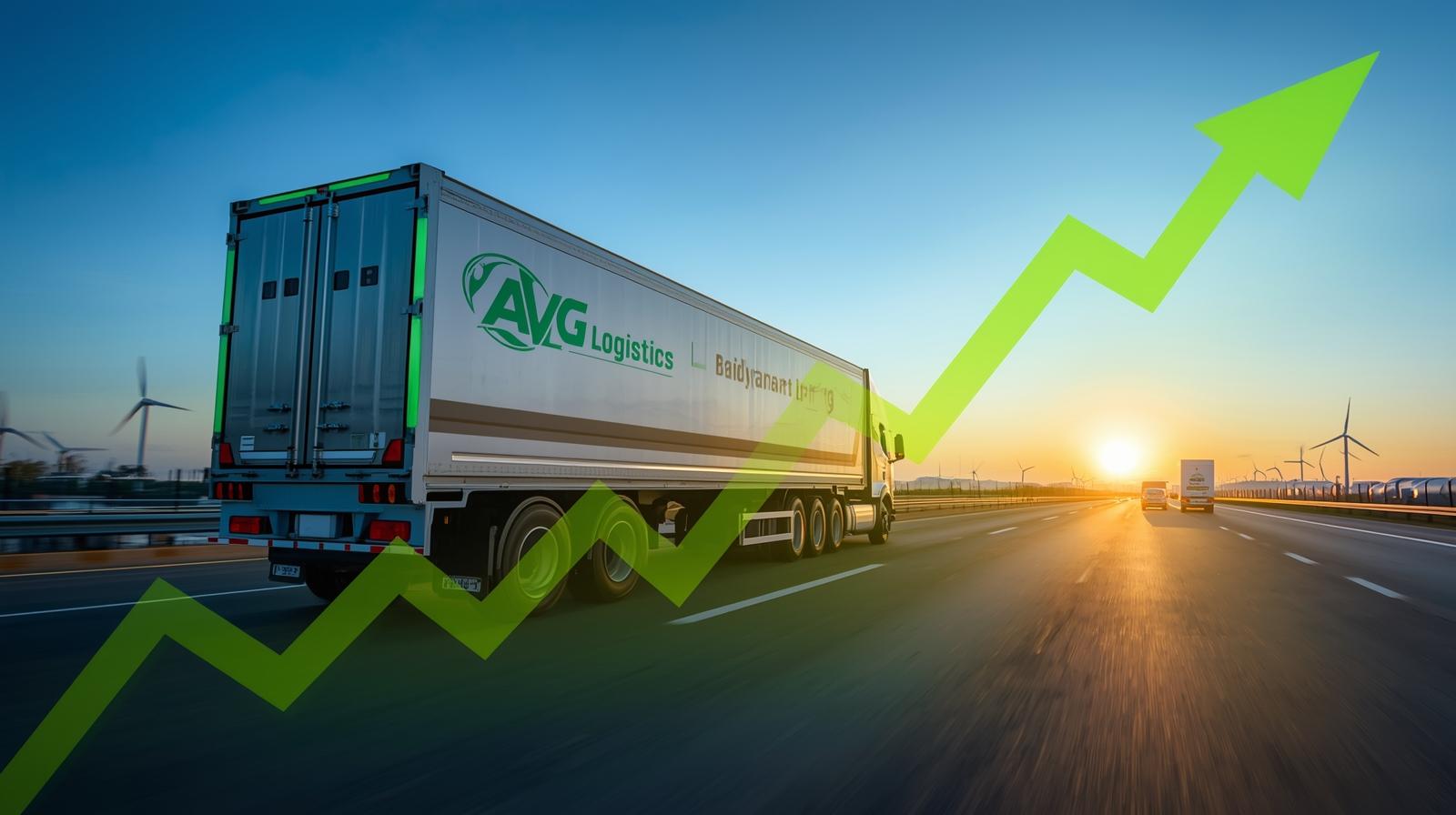
AVG Logistics LNG Partnership| Baidyanath LNG MoU| AVG Logistics Share News| Green Logistics India| AVG Logistics Financials 2025
Deal Snapshot
| Event | Details |
| Date of Announcement | December 25, 2025 |
| Entities Involved | AVG Logistics Limited (Public) & Baidyanath LNG Pvt Ltd (Private) |
| Agreement Type | Memorandum of Understanding (MoU) |
| Valid For | 5 Years (Initial Period) |
| Key Focus | LNG Infrastructure, LNG Fleets, Green Corridors |
| Sectors Targeted | Steel, FMCG, Cement, High-Volume Logistics |
1. Introduction: A Clean Energy Pivot
AVG Logistics Limited, a prominent player in India’s multimodal logistics sector, has announced a landmark partnership with Baidyanath LNG Private Limited. This Memorandum of Understanding (MoU), signed on December 25, 2025, marks a significant shift towards sustainable transportation in India’s heavy trucking industry.
As the logistics sector faces increasing pressure to decarbonize, this collaboration aims to replace traditional diesel fleets with Liquefied Natural Gas (LNG) alternatives. The move is not just environmental but deeply strategic, targeting cost efficiencies in a high-fuel-cost economy.
2. Deep Dive: The Strategic Rationale
The Partnership Structure
The collaboration is built on a symbiotic relationship between two specialized entities:
- AVG Logistics: brings its extensive pan-India logistics network, a fleet of 3,000+ vehicles, and deep relationships with marquee clients like Nestle, HUL, and Tata Steel.
- Baidyanath LNG (BLNG): A diversification venture of the Baidyanath Group, BLNG brings technical expertise in LNG infrastructure, access to LNG-powered fleets, and a growing network of fueling stations.
Why LNG? The Economic & Ecological Moat
The shift to LNG is driven by “Strategic Rationale” outlined in the MoU.
- Operating Efficiency: LNG engines typically offer lower operating costs compared to diesel, a critical advantage in the low-margin logistics business.
- Margin Expansion: Mr. Sanjay Gupta (MD & CEO, AVG) noted that the integration of LNG fleets is expected to optimize fuel costs, directly contributing to bottom-line performance over the medium to long term.
- Client Demand: Major clients in FMCG and Steel are aggressively pursuing “Net Zero” supply chains. AVG’s ability to offer green logistics solutions strengthens its competitive positioning and stickiness with these top-tier clients.
- Regulatory Alignment: The move aligns with India’s broader clean energy initiatives and the push for a “Gas-based Economy”.
3. Financial Analysis (FY25 Data)
AVG Logistics has released its financials for the fiscal year 2025 in conjunction with this update. The company continues to show robust growth, validating its “asset-light” yet “network-heavy” model.
| Metric | FY25 Performance | Implication |
| Revenue | ₹551.52 Cr | Strong topline growth driven by multimodal expansion. |
| EBITDA | ₹95.57 Cr | Healthy operating margins (~17.3%), indicating efficient fleet utilization. |
| PBT | ₹26.33 Cr | Profitable growth despite high interest/depreciation usually associated with logistics capex. |
Note: The shift to LNG is expected to further improve EBITDA margins in coming quarters by reducing fuel volatility exposure.
4. SWOT Analysis: The LNG Strategy
Strengths
- Established Network: Over 50 branches and 705,000 sq. ft. of warehousing space.
- Client Portfolio: Deep entrenchment with blue-chip clients (Nestle, ITC, Apollo Tyres) ensures immediate demand for green fleets.
- Rail & Road Mix: AVG is already strong in rail logistics; adding LNG road fleets creates a truly multimodal “Green” offering.
Weaknesses
- Infrastructure Dependence: The success of LNG trucks depends heavily on the availability of fueling stations. While Baidyanath is building this, the network is currently smaller than the diesel ecosystem.
- Capital Intensive: Transitioning fleets requires significant upfront capex, though the MoU hints at Baidyanath providing access to fleets, potentially mitigating this.
Opportunities
- First Mover Advantage: The “Green Logistics” space is still nascent in India. AVG can capture market share by being the preferred carrier for ESG-conscious MNCs.
- Carbon Credits: Potential future revenue streams from carbon trading as the company reduces its carbon footprint.
Threats
- Electric Vehicles (EVs): While LNG is the winner for long-haul heavy trucking today, rapid advancements in battery tech could pose a long-term threat (10+ years out).
- Fuel Price Volatility: Global gas prices can be volatile due to geopolitical tensions, potentially eroding the cost advantage over diesel.
5. Peer Comparison
AVG operates in a competitive landscape. Here is how it stacks up against peers who are also exploring green mobility.
| Company | Key Focus | Green Strategy |
| AVG Logistics | Multimodal (Rail/Road/Cold Chain) | LNG Partnership (Baidyanath), Rail usage. |
| GreenLine | Heavy Trucking | Exclusive focus on LNG trucks (First mover). |
| TCI Express | Express Logistics | Focus on CNG for last-mile and EVs for small loads. |
| VRL Logistics | General Goods Transport | Primarily bio-diesel and exploring EVs, less focus on LNG heavy trucks. |
Analysis: AVG’s partnership model allows it to compete with pure-play green logistics firms like GreenLine without taking the full infrastructure risk on its own balance sheet.
6. Valuation & Outlook
(Disclaimer: This is for educational purposes and not financial advice.)
Based on the FY25 EBITDA of ₹95.57 Cr, AVG Logistics appears to be trading at attractive valuations relative to its growth trajectory. The logistics sector generally commands a P/E of 25x-35x. With the “Green Premium” attached to this new venture, the stock may see a re-rating as ESG funds look for compliant small-cap logistics plays.
The Bull Case:
If AVG successfully converts 20-30% of its key FMCG routes to LNG, the fuel savings could boost Net Margins significantly. The 5-year MoU provides long-term visibility, reducing operational risk.
7. FAQ Section
Q1: What is the main benefit of the AVG x Baidyanath partnership?
A: The primary benefit is the deployment of LNG-powered trucks, which reduce carbon emissions and lower fuel costs compared to diesel, helping AVG’s clients meet their ESG goals.
Q2: Who are AVG Logistics’ major clients?
A: AVG serves major brands including Nestle, HUL, Tata Steel, Coca-Cola, Apollo Tyres, and UltraTech Cement.
Q3: Is Baidyanath LNG a public company?
A: No, Baidyanath LNG Private Limited is a private entity. However, AVG Logistics is listed on both BSE (543910) and NSE (AVG).
Q4: How much warehousing space does AVG Logistics own?
A: AVG Logistics operates approximately 705,000 Sq. Ft. of warehousing space across India.
Q5: What are AVG’s FY25 Financials?
A: For FY25, AVG reported a Revenue of ₹551.52 Cr, EBITDA of ₹95.57 Cr, and Profit Before Tax (PBT) of ₹26.33 Cr.
AVG Logistics LNG Partnership| Baidyanath LNG MoU| AVG Logistics Share News| Green Logistics India| AVG Logistics Financials 2025
Also View:
Open Demat Account
by Mirae Asset (m,Stock)
-
Trading Alert: Indian Stock Market Holidays on March 31 and Good Friday 2026
Stock Market Holidays 2026| NSE Holiday List| BSE Holidays| Mahavir Jayanti 2026| Good Friday 2026| Trading Calendar India| Share Market…
-
Nifty 50 and Sensex Post-Bloodbath Analysis: Recovery or Trap?
Nifty 50 Prediction Tomorrow| Sensex Analysis March 2026| Indian Stock Market Recovery| Stock Market Bloodbath Reasons The Indian stock market…
-
Stock Market Bloodbath 2026: 10 Rules to Protect Your Wealth
Stock Market Bloodbath 2026| Market Crash Strategy| Portfolio Recovery Tips| Investing in Volatile Markets Critical Event Status / Date Market…