Iran Food Export Ban| Iran Agricultural Halt 2026| Middle East Food Security Crisis| Iran Domestic Supply Protection| Iran Food Export Ban Review 2026
Critical Dates Table
| Event | Date | Status |
| Potato Export Ban Initiated | March 2, 2026 | ACTIVE |
| Broad Export Ban (Eggs, Tomatoes, Dates) | March 3, 2026 | ACTIVE |
| Strait of Hormuz Blockade Effective | February 24, 2026 | ONGOING |
| Ministry of Agriculture Review | March 15, 2026 | SCHEDULED |
1. Executive Summary: The Domestic Fortress
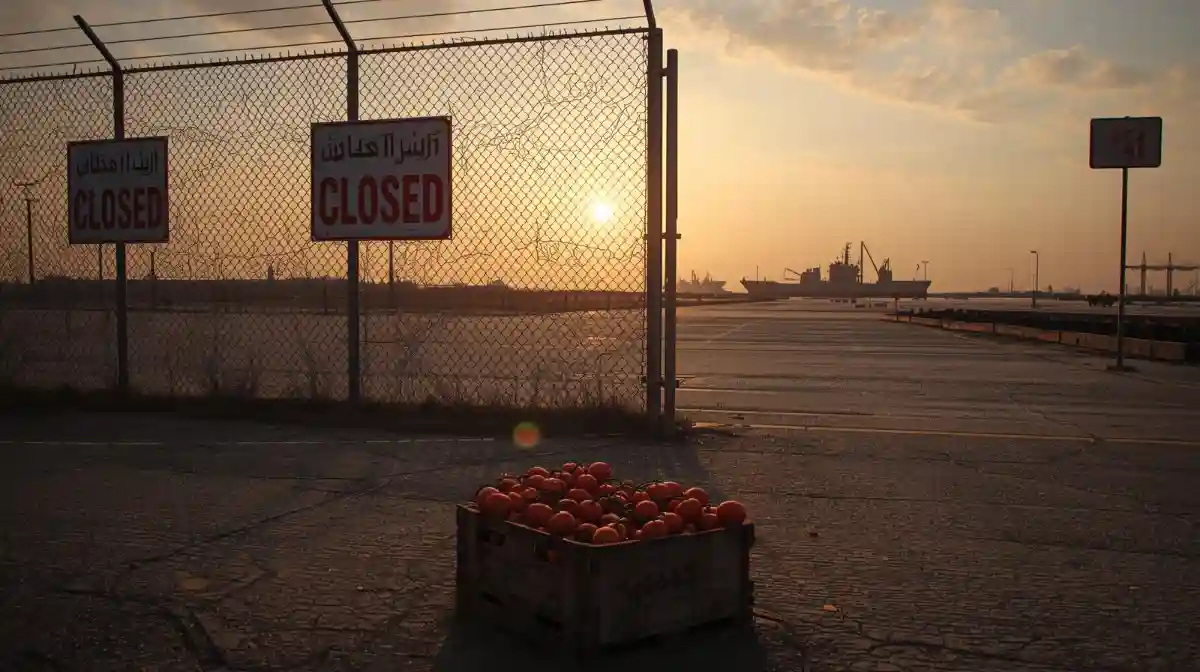
As of March 3, 2026, the Islamic Republic of Iran has officially shuttered its agricultural borders. The Ministry of Agriculture and the Customs Administration have moved from targeted restrictions to a blanket “until further notice” ban on several essential food categories. This is not merely a trade policy; it is a wartime survival tactic. Following the collapse of diplomatic channels in Geneva and the subsequent military strikes by U.S. and Israeli forces (True Promise 4), Iran’s economy has entered a state of “total internal prioritization.”
2. Business Model: From Global Player to Siege Economy
Before the 2026 crisis, Iran was a dominant regional exporter of fruits, nuts, and vegetables. Its business model relied on high-volume exports to Iraq, the UAE, and Russia to secure hard currency.
- The Pivot: The “Resistance Economy” model has been activated. Instead of seeking “Petrodollars” or “Agrodollars,” the focus is now on Caloric Security.
- Redirection of Supply: Approximately 1.2 million tons of annual apple exports and hundreds of thousands of tons of greenhouse tomatoes are being redirected from the Persian Gulf ports to the bazaars of Tehran, Isfahan, and Mashhad.
- Logistical Bottlenecks: With the Strait of Hormuz effectively closed to commercial shipping, the export-led model became physically impossible. The government has seized control of the supply chain to prevent hoarding by private intermediaries.
3. Financials: The High Price of Security
The financial data for Q1 2026 paints a grim picture. The ban is a desperate attempt to curb a “wealth evaporation” crisis.
- Inflation Metrics: Official food inflation hit 72% in February 2026. The rial has plummeted to an all-time low of 1,750,000 IRR per 1 USD on the open market.
- Revenue Loss: By halting food exports, Iran is sacrificing an estimated $4.5 billion in annual non-oil revenue. This exacerbates the foreign exchange shortage but is deemed a necessary “social subsidy.”
- Input Costs: Fertilizer prices (specifically Urea) have spiked globally by $60–$80 per ton this week. Even as a major producer, Iran’s internal distribution costs have tripled due to fuel shortages and infrastructure damage from recent strikes.
4. SWOT Analysis
Strengths
- Resource Sovereignty: Iran remains one of the few Middle Eastern nations with a significant caloric surplus in staples like dates and potatoes.
- State Command: The Revolutionary Guard (IRGC) controls the major border crossings, allowing for rapid enforcement of the ban.
Weaknesses
- Currency Freefall: Without export proceeds, there is no floor for the rial.
- Infrastructure Decay: Years of sanctions have left the domestic cold-storage and rail networks unable to handle the sudden 100% redirection of export-grade produce.
Opportunities
- Eurasian Trade (EEU): Potential to bypass the maritime blockade via land routes to Russia and Armenia, though current bans prevent this.
Threats
- Black Markets: Smuggling to Iraq and Afghanistan is rampant. A tomato that sells for 50,000 rials in Tehran can fetch five times that in Erbil.
- Social Unrest: If the ban fails to lower prices quickly, the “Bread Riots” seen in January 2026 could return with greater intensity.
5. Peer Comparison: Regional Food Stability
Iran is not the only nation feeling the heat. The 2026 conflict has created a domino effect.
| Country | Strategy | Impact on Iran |
| India | Halting Basmati deals to Iran | Severe shortage of luxury grains in Iran. |
| Azerbaijan | Diversifying away from Iranian imports | Loss of a key $600M+ market for Iran. |
| Kazakhstan | Suspending grain shipments to Iran | Threatens Iran’s wheat and flour reserves. |
| Turkey | Increasing potato/onion exports to Iran | Temporary relief, but at high FX costs. |
6. Grey Market Premium (GMP) & Black Market Analysis
In the current “War Zone” economy, a “Grey Market” for food has emerged.
- The “Border Premium”: As of March 3, illegal export permits are reportedly being sold for exorbitant fees at the Sistan-Baluchestan border.
- Commodity Arbitrage: Eggs and dates are currently the highest-traded “black gold,” as they are easily transportable across the porous land borders to Pakistan and Iraq.
7. Valuation: The “War Premium”
Valuing the Iranian agricultural sector in 2026 requires a “War Risk” discount.
- Agricultural GDP: Expected to shrink by 8.5% in 2026 due to the export halt and lack of imported pesticides.
- Sector Outlook: “Negative.” Unless a ceasefire is brokered, the agricultural sector will transition from a revenue generator to a state-subsidized liability.
8. Comprehensive FAQ Section
Q1: Which specific products are banned?
As of March 3, 2026, the ban explicitly covers eggs, tomatoes, potatoes, and all varieties of dates. Additional bans on apples and oranges are expected by mid-month.
Q2: Why did Iran choose this specific timing?
The timing aligns with the start of Ramadan and the approaching Iranian New Year (Nowruz), periods of peak domestic demand. The military escalation provided the final impetus to prioritize internal stability over foreign trade.
Q3: How long will the export ban last?
The Ministry of Agriculture has labeled it “indefinite.” Analysts suggest it will remain in place as long as the Strait of Hormuz remains a “no-go” zone for commercial shipping.
Q4: Will this affect global food prices?
Yes. Iran is a top-four global exporter of apples and a primary supplier of dates to the EU and India. Expect a 15%–20% price hike in these commodities globally within the next month.
Q5: Is there a risk of food shortages within Iran?
The ban is designed to prevent shortages. However, logistics issues mean that while farmers in the north have a surplus, cities in the south may still face empty shelves.
Iran Food Export Ban| Iran Agricultural Halt 2026| Middle East Food Security Crisis| Iran Domestic Supply Protection| Iran Food Export Ban Review 2026
Also View:
- 45 Weeks. 45 Lessons. From Basics to Advanced – Master Stock Market Investing in Less than 1 Year.
- Lesson 1: What is a Stock Market? Beginner’s Guide to Understanding Shares & Trading
- Cash Flow Statement: Why Profits Lie but Cash Never Does
📢 Join Our Market Community
📱 Stay updated on IPOs, Results & Market News:
- WhatsApp Channel: Join Now
- Telegram: Follow Updates
- Arattai: Connect with Us
📌 Stock Market Disclaimer
- Disclaimer: This post is for informational and educational purposes only and does not constitute financial advice or a recommendation to buy/sell any stock or share. Investing in the stock market involves risk. Past performance is not indicative of future results. Always conduct your own research or consult a licensed financial advisor before making investment decisions.
- The information provided on this platform is for educational and informational purposes only. It should not be considered as investment advice, stock recommendations, or financial guidance.
- ⚠️ Stock Market Investments
- Investing in equities, derivatives, mutual funds, and other financial instruments involves market risks, volatility, and the possibility of capital loss.
- Past performance of stocks or indices is not indicative of future returns.
- Always conduct your own research or consult a SEBI-registered financial advisor before making investment decisions.
- ⚠️ IPO (Initial Public Offerings)
- IPO details, issue size, subscription data, and allotment status shared here are based on publicly available information from company filings, stock exchanges, and merchant bankers.
- Investing in IPOs carries risks including listing volatility, business uncertainties, and sector performance dependency.
- Neither acceptance of applications nor allotment guarantees profits. Investors should evaluate their risk appetite before subscribing.
- ⚠️ GMP (Grey Market Premium)
- Grey Market Premium (GMP) is an unofficial and unregulated indicator of expected IPO listing price.
- GMP data is collected from market observers and informal trading circles; it does not have any legal or SEBI recognition.
- GMP values are highly speculative and may differ significantly from actual listing prices. Investors should not rely solely on GMP while taking investment decisions.
- ✅ General Advisory
- We do not provide any buy/sell/hold recommendations.
- Readers and investors are solely responsible for their investment actions and decisions.
- This platform, its authors, and affiliates are not liable for any direct or indirect financial loss arising from the use of this information.
- 🔒 Always invest responsibly and diversify your portfolio.