Indian Stock Market Review Today| Nifty Prediction Tomorrow| Sensex Today Crash| Nifty Expiry Strategy
Executive Summary: A Day of Reckoning on Dalal Street
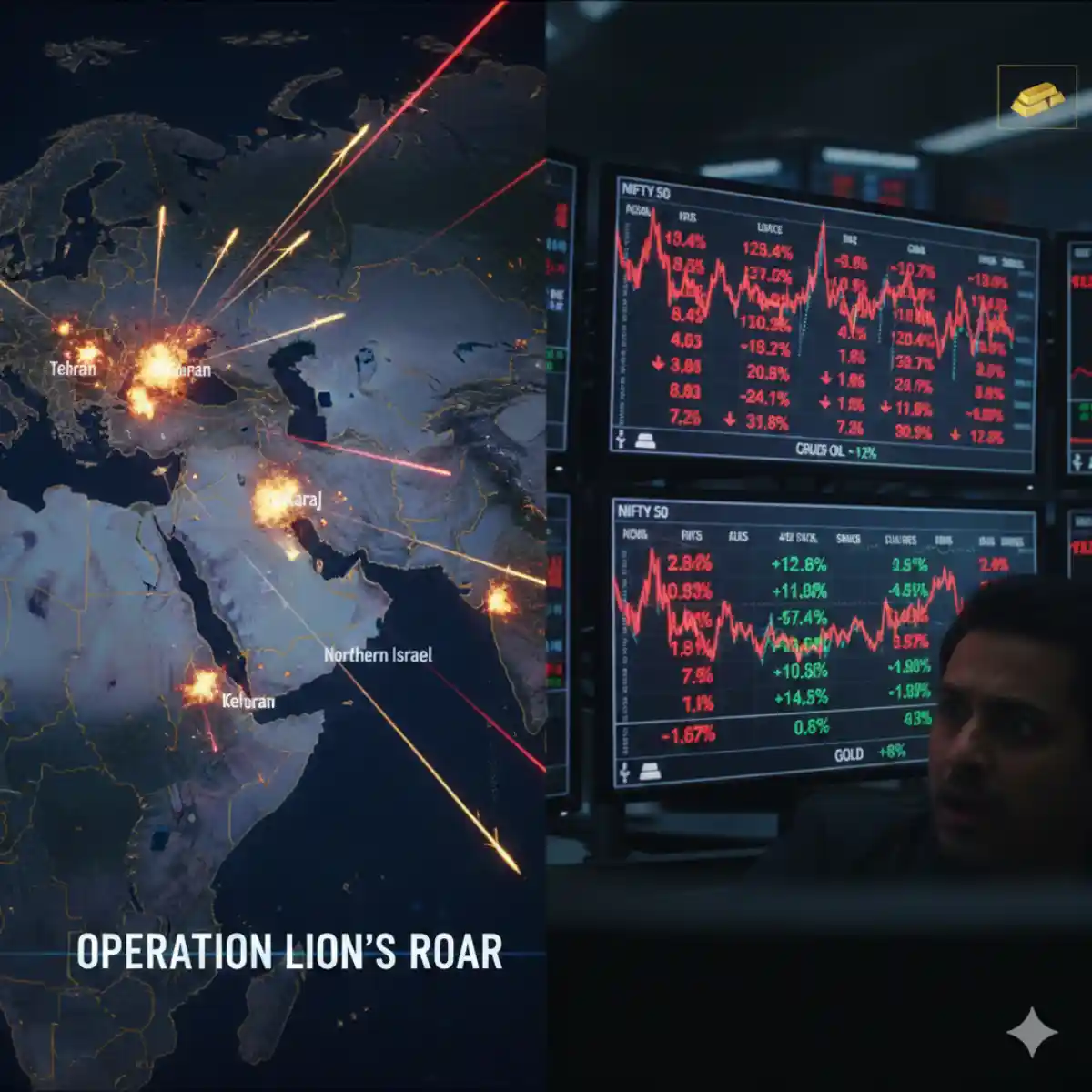
It was a day that many investors would rather forget. The Indian stock markets witnessed a massive sell-off today, reminding everyone of the inherent volatility in equities. Both benchmark indices, the Nifty 50 and the BSE Sensex, suffered significant losses, leaving traders on edge and fueling intense speculation about whether this is a necessary correction or the beginning of a larger downturn.
The closing figures paint a grim picture: the Nifty 50 slipped a staggering 600 points, while the Sensex plummeted 1836 points. However, the true narrative isn’t just about today’s carnage; it’s about tomorrow. With the monthly/weekly expiry scheduled for tomorrow, all indicators point to a high-octane battle between the bulls and the bears, with professional analysis suggesting the possibility of a definitive, one-sided movement.
Note: The analysis and key levels discussed in this article are derived strictly from the market dynamics of the day described and are intended for professional consideration.
The Expiry Factor: Why Tomorrow is the ‘Race’
Tomorrow is not just another trading session. It’s Expiry Day. For the uninitiated, this is when derivative contracts (Futures and Options) expire, forcing traders to either close their positions, exercise them, or roll them over to the next month. This process inherently injects substantial volume and volatility into the market.
In the context of today’s drastic sell-off, tomorrow’s expiry becomes critical because many institutional investors (FIIs/DIIs) and retail traders will be scrambling to adjust their massive positions. The intense positioning of Call and Put writers around specific strikes creates powerful technical pivot points.
Historically, post-crash expiry days often exhibit a “one-side movement.” This happens when the market breaks out (or breaks down) from these key technical congestion zones. Once a certain level is breached, it often triggers a cascade of stop-losses, forcing everyone on the wrong side of the trade to cover, thereby accelerating the prevailing momentum. This is why analysts are labeling tomorrow as “the race.”
Nifty 50 Deep Dive: Key Technical Levels & Tomorrow’s Scenarios
Today’s 600-point slide on the Nifty 50 has drastically altered the short-term technical landscape. The critical question now facing traders is whether today marks a significant bottom or a station on a longer downward journey.
The Bullish Case: FOMO Buying Above 22900
If the market sentiment shifts dramatically overnight—perhaps due to positive global cues or unexpected domestic factors—and the Nifty 50 manages to open or sustain above the 22900 mark, we could witness a powerful short-covering rally.
The logic behind this is simple yet powerful:
- Psychology of the Bottom: A significant portion of the market considers today’s deep correction as a healthy pull-back and is looking for a confirmation of a bottom.
- Fear Of Missing Out (FOMO): If Nifty moves past 22900, institutional and retail buying could accelerate rapidly as investors who sat on the sidelines during today’s panic rush to capture the perceived low prices.
- Technical Acceleration: Crossing 22900 would likely trigger stop-losses for many traders who have written (sold) Call options. This forced covering adds immense buying pressure, potentially thrusting the index rapidly toward the 23000 psychological barrier.
The Bearish Case: Panic Selling Below 22400
Conversely, the immediate downside risk is palpable. The breakdown of today’s levels suggests a potential imbalance.
The critical pivot point to watch on the downside is 22400. If the Nifty 50 breaks and sustains below this level:
- Capital Preservation Mode: Traders and investors alike, fearing that the correction is not over, will prioritize saving their remaining capital over looking for a bottom.
- Aggressive Panic Selling: A breach of 22400 will likely unleash a second, more aggressive wave of panic selling. This occurs when long-term investors begin to unload positions and Put buyers increase their bets, driving the index further down.
- Liquidation and Expiry Stress: On expiry day, if a critical support level like 22400 is violated, option writers who were “short puts” will be forced to liquidate their positions under extreme stress, exacerbating the downward spiral.
Indian Stock Market Review Today| Nifty Prediction Tomorrow| Sensex Today Crash| Nifty Expiry Strategy
Sensex Analysis: Rocket or Reckoning?
The BSE Sensex, mirroring the broader market sentiment, was not immune to today’s panic, shedding 1836 points. For this major benchmark index, the technical battle lines for tomorrow’s expiry are clearly drawn around two pivotal levels.
The Sensex Rocket: Breakout Above 74000
The sentiment on the Sensex is identical to the Nifty. For a resumption of the primary uptrend, the market must quickly reclaim lost ground.
The key trigger level for the Sensex is 74000.
- A decisive move above 74000 would signal a potential failure of the bearish momentum established today.
- This level acts as a critical line in the sand. If breached to the upside, it will likely act as a launchpad for a significant rally (the “rocket”), driven by short-covering from Call writers and opportunistic buying from those seeking a V-shaped recovery.
The Sensex Panic: Breakdown Below 72400
On the other hand, the dangers of a prolonged downside cannot be understated. If the initial bounce fails to materialize, the focus turns sharply to immediate support levels.
For the Sensex, the critical level to monitor is 72400.
- Any move and sustained trade below 72400 will signal that the bears have seized control and today’s correction was merely the initial phase.
- If this level breaks, market participants are expected to shift gears into aggressive, “safe-mode” selling, prioritizing capital protection over all else. The resultant panic could see aggressive liquidation across the board, particularly in heavyweight stocks that dominate the index.
Investor Psychology: Navigating the Extreme Volatility
Beyond charts and numbers, today’s market crash provides a case study in investor psychology. The stock market is driven by two primary emotions: fear and greed. Today, fear was the dominant force. Tomorrow, the interplay of FOMO (greed) and Panic (fear) will dictate the outcome.
- Fear (Today’s Phase): Today’s 1836-point Sensex drop was a pure manifestation of fear, triggered by an imbalance in supply and demand. Professional analysts must always respect price action; a sell-off of this magnitude is never accidental.
- The ‘Bottom Fishing’ Trap: There will always be a temptation to “buy the dip” or “catch a falling knife,” believing that today is the absolute bottom. While this can yield substantial rewards, it is a high-risk strategy that must be validated by price confirmation (such as Nifty holding above 22900).
- Greed (Tomorrow’s FOMO): If Nifty starts moving toward 23000, greed (FOMO) could swiftly take over, as traders who missed the low rush to join the rally.
- Expiry-Induced Euphoria/Panic: Expiry days often amplify these psychological states, leading to irrational, momentum-driven movements.
Conclusion and Risk Management for Tomorrow
In conclusion, today’s Indian stock market rout, characterized by a 600-point Nifty slip and an 1836-point Sensex crash, has set the stage for an explosive, high-stakes battle during tomorrow’s expiry session. The market’s direction will hinge entirely on the breach of critical technical levels.
- For Nifty: Above 22900 suggests a powerful FOMO-driven rally toward 23000; below 22400 signals aggressive panic selling.
- For Sensex: Above 74000 is a bullish rocket trigger; below 72400 is a critical warning sign of panic liquidation.
Given the extreme volatility and the likelihood of a one-sided, explosive movement due to expiry dynamics, risk management is paramount. Traders must adhere strictly to their stop-losses, avoid over-leveraging, and consider the wider implications of these key technical breaches. The race is truly on.
SWOT Analysis of the Indian Stock Market (Current Status)
- Strengths: Strong domestic earnings, robust GST collections, and a growing retail investor base providing liquidity.
- Weaknesses: High valuations compared to global peers and sensitivity to crude oil price fluctuations.
- Opportunities: A successful expiry above key levels (22,900 Nifty / 74,000 Sensex) could lead to new all-time highs.
- Threats: Continued global inflation concerns and potential “Panic Selling” if support levels are breached.
FAQ: Indian Stock Market Review and Predictions
1. Why did the Nifty slip 600 points today? Today’s decline was likely a result of cumulative profit booking, global market weakness, and technical breakdowns at key psychological levels.
2. Is tomorrow a good day for long-term investment? For long-term investors, deep red days are often “Value Zones.” However, from a trading perspective, wait for Nifty to sustain above 22,900 before committing fresh capital.
3. What does “One-Side Movement” mean on Expiry? On expiry days, once a trend is established (either up or down), it often continues without significant pullbacks because traders are forced to close their derivative positions, fueling the momentum.
4. What are the key levels for Sensex tomorrow? Keep a sharp eye on 74,000 for a bullish “rocket” move and 72,400 for a bearish “panic” move.
Indian Stock Market Review Today| Nifty Prediction Tomorrow| Sensex Today Crash| Nifty Expiry Strategy
Also View:
- 45 Weeks. 45 Lessons. From Basics to Advanced – Master Stock Market Investing in Less than 1 Year.
- Lesson 1: What is a Stock Market? Beginner’s Guide to Understanding Shares & Trading
- Cash Flow Statement: Why Profits Lie but Cash Never Does
📢 Join Our Market Community
📱 Stay updated on IPOs, Results & Market News:
- WhatsApp Channel: Join Now
- Telegram: Follow Updates
- Arattai: Connect with Us
📌 Stock Market Disclaimer
- Disclaimer: This post is for informational and educational purposes only and does not constitute financial advice or a recommendation to buy/sell any stock or share. Investing in the stock market involves risk. Past performance is not indicative of future results. Always conduct your own research or consult a licensed financial advisor before making investment decisions.
- The information provided on this platform is for educational and informational purposes only. It should not be considered as investment advice, stock recommendations, or financial guidance.
- ⚠️ Stock Market Investments
- Investing in equities, derivatives, mutual funds, and other financial instruments involves market risks, volatility, and the possibility of capital loss.
- Past performance of stocks or indices is not indicative of future returns.
- Always conduct your own research or consult a SEBI-registered financial advisor before making investment decisions.
- ⚠️ IPO (Initial Public Offerings)
- IPO details, issue size, subscription data, and allotment status shared here are based on publicly available information from company filings, stock exchanges, and merchant bankers.
- Investing in IPOs carries risks including listing volatility, business uncertainties, and sector performance dependency.
- Neither acceptance of applications nor allotment guarantees profits. Investors should evaluate their risk appetite before subscribing.
- ⚠️ GMP (Grey Market Premium)
- Grey Market Premium (GMP) is an unofficial and unregulated indicator of expected IPO listing price.
- GMP data is collected from market observers and informal trading circles; it does not have any legal or SEBI recognition.
- GMP values are highly speculative and may differ significantly from actual listing prices. Investors should not rely solely on GMP while taking investment decisions.
- ✅ General Advisory
- We do not provide any buy/sell/hold recommendations.
- Readers and investors are solely responsible for their investment actions and decisions.
- This platform, its authors, and affiliates are not liable for any direct or indirect financial loss arising from the use of this information.
- 🔒 Always invest responsibly and diversify your portfolio.